

Five Questions with painter Alexandra Strenfel
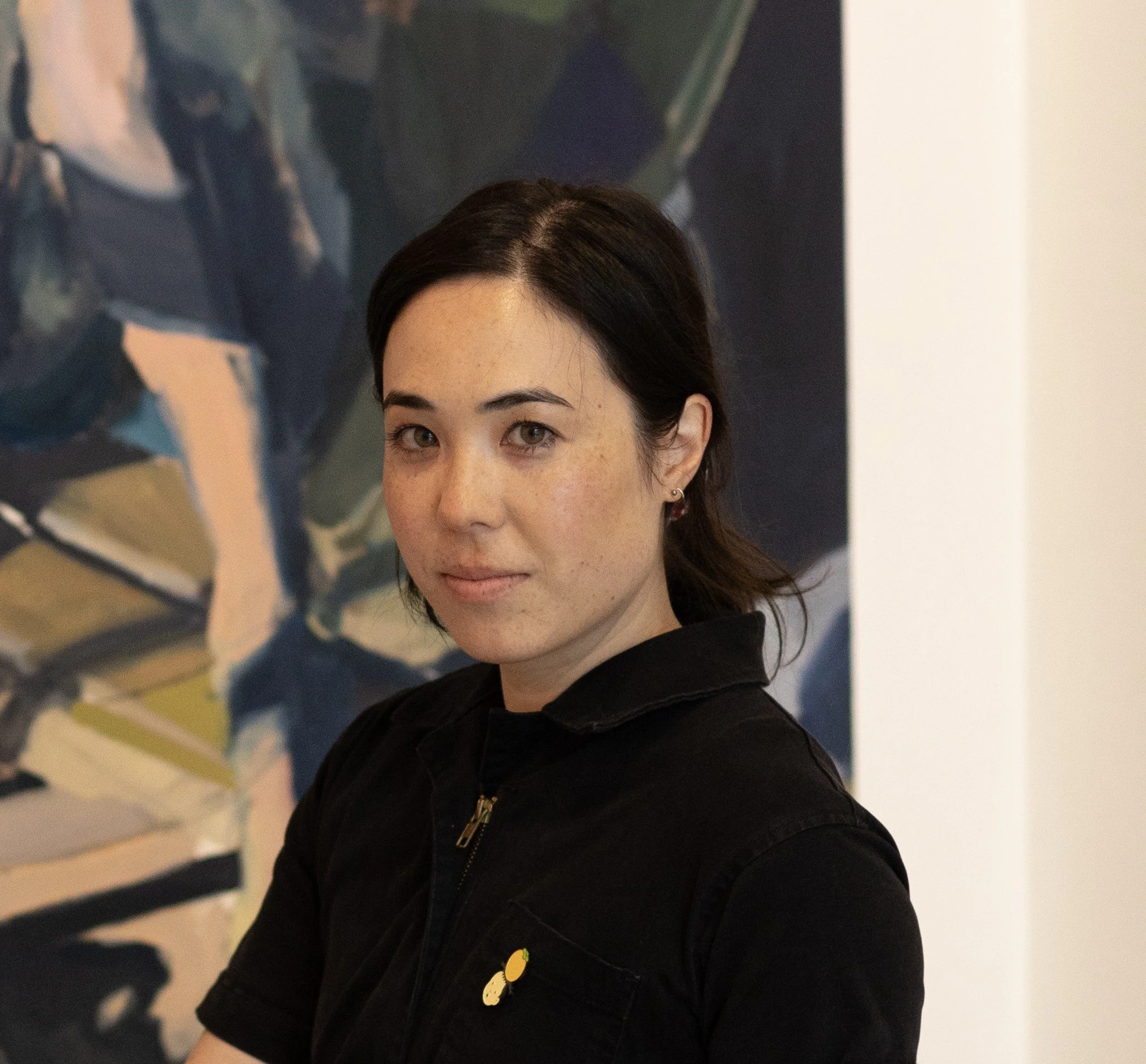
CAM member Whitney Bashaw asked Strenfel a few questions about her inspiration and process:
WB: Is there a spot in Seattle you go to when you need inspiration/feeling stuck?
AS: I don’t have one “go to” place, but seeing art in person usually helps me feel energized and itchy to get back in the studio. I tend to stay close to my neighborhood, so the Frye, the Seattle Art Museum, or the Belltown art walk are the places I frequent the most.
WB: What time of day do you work best? Do you have a routine or ritual associated with getting to work?
AS: My preferred time to work is in the afternoon/early evenings. I work nights, so this is schedule born out of necessity rather than preference. I’m generally pretty restless and distracted when I first arrive, and know that I need to ease my way into actually making stuff. I’ll mess around on my phone for a bit, perhaps looking at other artists, maybe do a lap around the studio and chat with people, or if I’m feeling especially productive, I’ll lay down the sketch and underpainting for a new piece.
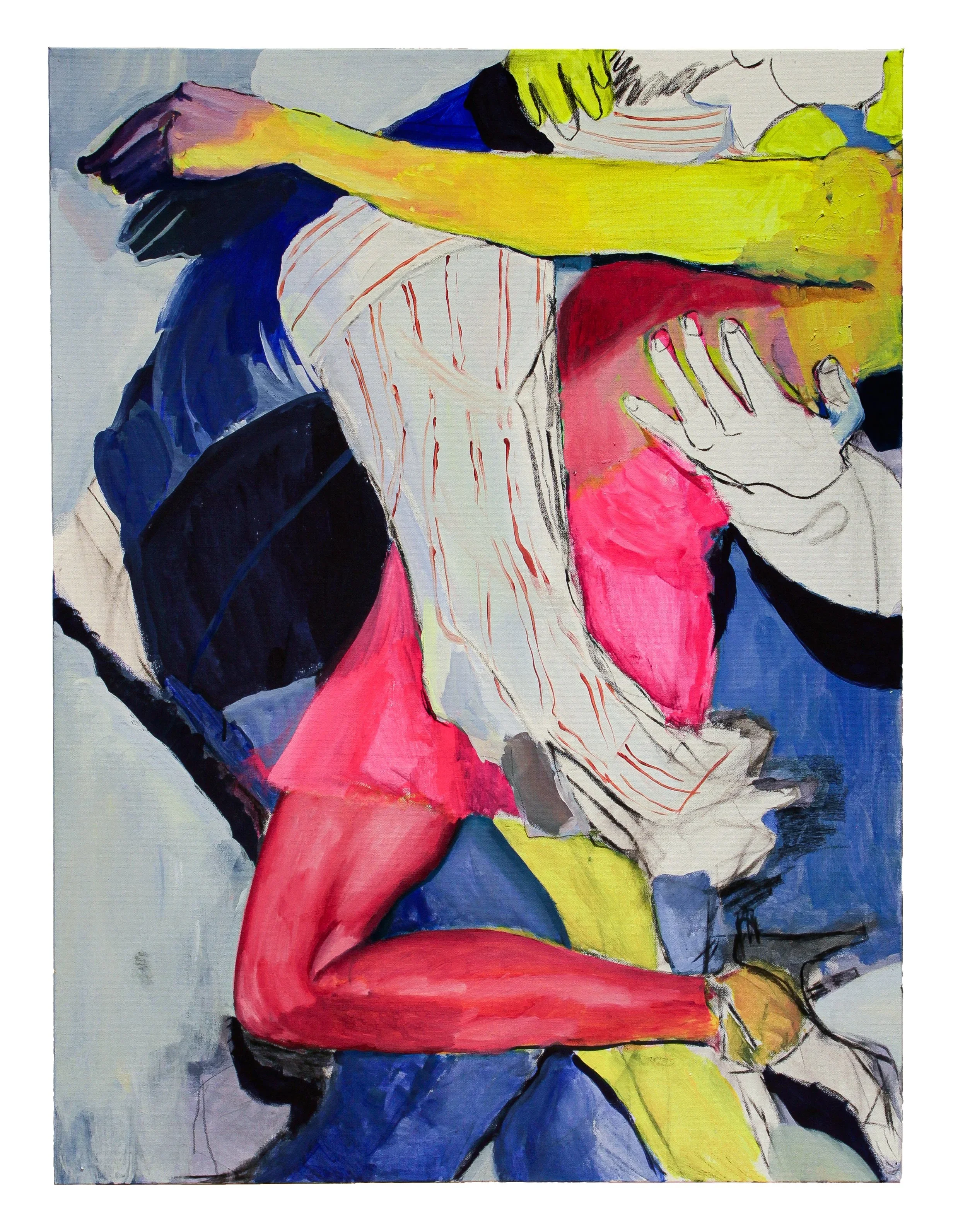
Embrace, 2025, 40 × 30 inches Flashe, oil, and charcoal on canvas
Alexandra Strenfel is an artist living and working in Seattle, Washington. She received her BA in Studio Art from University Of California, Berkeley in 2014, with an emphasis on oil painting. Since then, she has expanded her practice to include mixed media painting, charcoal and pencil figure drawing, and collage. Her current work is focussed on portraiture that is narrative driven, psychological, and fantastical, and features the people, places, and things that make up her current existence. She has been an active member of the shared art studio and gallery space Common Area Maintenance for the past ten years. In September 2023, she had her first solo show there, exhibiting a wide range of work made over a span of eight years.
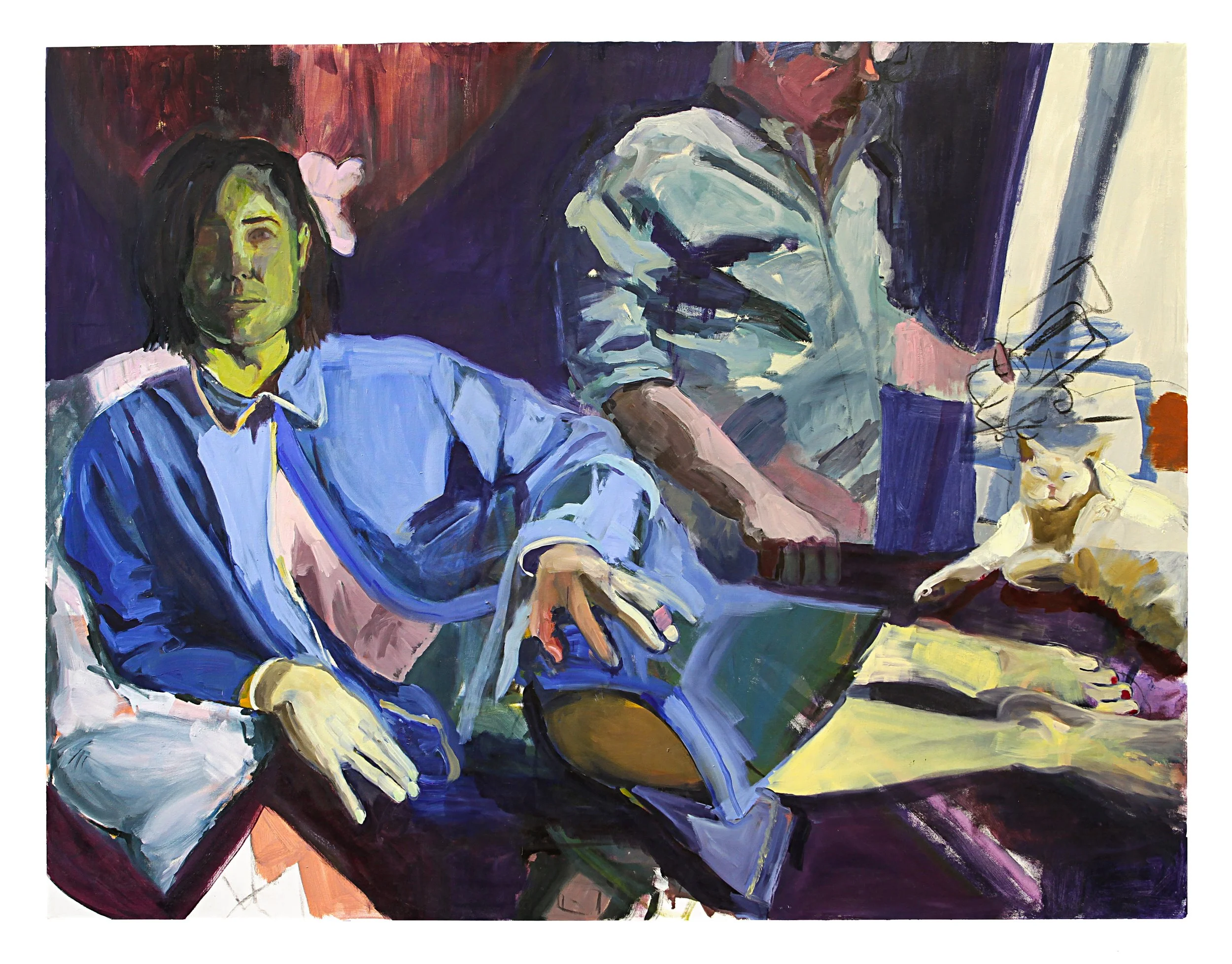
Jack Sleeping, 2025, 46 × 60 Oil, acrylic, and charcoal on canvas
WB: You’ve been at your work for many years (how many is it now?). What themes do you find yourself returning to? What larger motifs are you finding?
AS: In 2014 I graduated with my BA from UC Berkeley and have maintained a studio practice independently since (all the time I’ve been a member at CAM)! I consider myself primarily a figurative artist, it is a subject I come back to again and again, albeit in different ways over the years. The work I was making in my last semester of college was large-scale, oil paintings with a distinctive color palette of pastels, alizarin crimson, prussian blue, and golden yellow, and high levels of abstraction of the figure and space. I was much more interested in the body and its use as a compositional element within the canvas. Faces were difficult so I avoided them if I could. Ten years later I’ve come full circle and have been only interested in portraits/self-portraits. I feel a bit weird painting the faces of strangers, so out of convenience and necessity I frequently use myself as reference, and if they’re lucky, my friends and partner occasionally make an appearance. The paintings still have flourishes of abstraction; I like to leave bits of weirdness and illegibility in every painting, but they are much more narrative now. I’ve also been pushing myself to take a mixed media approach, incorporating acrylic, charcoal drawing, collage, and airbrush within my paintings. I am both excited and apprehensive to see where this will take me.
WB: Anything you are reading, watching, absorbing or looking at right now that is steering your creative process?
AS: I am currently taking an online art class with Nancy McCarthy through Black Pond Studio in Massachusetts. Every two weeks we meet to discuss and show our work, and it has been greatly motivating to have those deadlines, receive feedback, and also get to see the process and work of my fellow classmates over the course of these few months. Depending on what I’m working on, I also have a rotating roster of artists that I look to for inspiration and problem solving. Currently those include: Kerry James Marshall, Anthony Cudahy, Jennifer Packer and Elizabeth Malaska.
WB: “I do not know whether I work in order to make something or in order to know why I cannot make what I would like to make” -Alberto Giacometti. Do you find yourself butting against limitations of your vision of creation versus the reality of it? How do you deal with that tension?
AS: Honestly, I find myself grappling with this tension all of the time! I obviously have some facility as a draftsman and painter, but I have never been able to execute a likeness or image perfectly/ all in one take. This is quite frustrating at times. However, in getting to know myself and how I function as an artist, I have come to accept the reality and limitations of what I can do and turn that into a tool and integral part of my process. By allowing myself the space to revise and make mistakes, I leave room for spontaneity and chance and the artwork to become something beyond the constraints of what is pictured in my head. One of the reasons I make art is this thrill of discovery and getting to see the unexpected directions an idea can take.